

You’ll need a permit for porta potty rentals in Apple Valley when placing units on public property, hosting events with over 100 attendees, or deploying them for construction projects exceeding 30 days. Apple Valley follows San Bernardino County’s sanitation codes, requiring permits for any installation impacting the public right-of-way or lasting beyond temporary use. Permit fees range from $25 to $300, depending on duration and purpose, with applications processed within 5-10 business days. Understanding the complete regulatory framework guarantees full compliance.
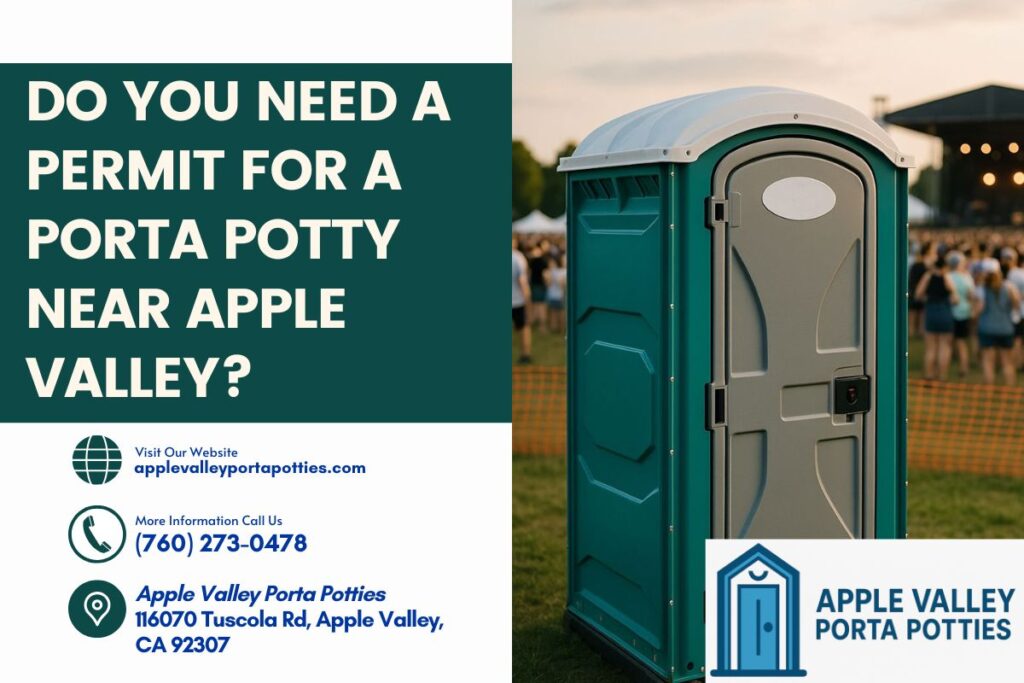
Although porta potty installations typically don’t require permits for standard temporary use, specific situations mandate regulatory approval in Apple Valley and San Bernardino County.
You’ll need permits when placing units on public property, including streets, sidewalks, or municipal land. Construction projects exceeding 30 days often trigger permit requirements, as do special events with anticipated attendance over 500 people.
Commercial installations on private property may require permits if they’re considered permanent fixtures or affect property setbacks.
You’re also subject to permit requirements when connecting to existing sewer systems or when your installation impacts traffic flow or pedestrian access.
Environmental regulations kick in near waterways, protected areas, or when soil conditions require special consideration.
Understanding these requirements protects your project timeline and keeps you compliant with local ordinances.
See also: Apple Valley portable toilet rental
When organizing public events and gatherings in Apple Valley, you’ll face specific permit requirements based on attendance numbers, duration, and location type. Events exceeding 100 attendees typically trigger mandatory permit applications through the city’s special events division.
You must submit documentation 30-45 days before your event, including site plans showing porta potty placement and access routes.
Private property events generally don’t require permits unless they impact the public right-of-way or exceed noise ordinances. However, public parks, streets, or municipal facilities always mandate special use permits.
The application process requires proof of adequate sanitation facilities—typically one unit per 50-75 people for events under four hours.
Weekend festivals, concerts, and community gatherings fall under improved scrutiny, requiring supplementary safety certifications and insurance documentation before approval.
Construction projects in Apple Valley operate under permit frameworks different from those for temporary events, with extended timeline requirements and improved regulatory oversight.
For porta potties that remain on-site beyond 30 days, you’ll need specialized permits, which trigger San Bernardino County’s long-term sanitation protocols.
Your construction permits must specify restroom quantities based on worker counts—typically one unit per 20 employees for standard shifts.
Extended deployments require augmented waste management documentation, including pumping schedules and maintenance logs that satisfy health department inspections.
You’re responsible for ensuring ADA-compliant units meet accessibility standards throughout the project.
Submit permit applications 15 days before deployment, including site plans showing placement locations and utility clearances.
Non-compliance results in work stoppages and fines, so proper documentation is essential to secure your project’s uninterrupted progress.
Since Apple Valley operates under San Bernardino County’s jurisdictional authority, you’ll navigate a dual regulatory framework that combines municipal ordinances with county-wide sanitation codes. This streamlined approach eliminates bureaucratic confusion while maintaining crucial health standards.
| Permit Type | Duration | Fee Range |
|---|---|---|
| Temporary Event | 1-7 days | $25-$75 |
| Construction | 30-180 days | $50-$150 |
| Commercial Long-term | 6-12 months | $100-$300 |
You’re required to submit applications through San Bernardino County’s Environmental Health Services division. They’ll evaluate your placement location, accessibility requirements, and waste management protocols. Most permits are processed within 5-10 business days, giving you flexibility to plan accordingly. The county prioritizes straightforward compliance over complex restrictions, respecting your operational independence while ensuring public safety standards.
Before submitting your porta potty permit application, you’ll interact with three primary agencies that oversee different compliance aspects.
The San Bernardino County Environmental Health Department handles waste management protocols and sanitation standards. You’ll need their approval for proper waste disposal procedures and cleaning schedules.
The Building and Safety Division reviews structural placement requirements, ensuring your units don’t violate setback distances or obstruct emergency access routes. When multiple units are involved, they’ll verify compliance with the Americans with Disabilities Act.
Your local fire department maintains jurisdiction over emergency access and fire safety clearances. They’ll inspect placement locations to confirm firefighting equipment accessibility and evacuation route compliance.
Each agency operates independently but coordinates permit approval. Before final authorization, you’ll receive separate documentation from each department.

When planning porta potty placement, zoning classifications determine where to position units on your property legally. Apple Valley’s municipal code establishes specific setback requirements and placement restrictions that vary by zone designation.
| Zone Type | Setback Requirement | Duration Limit |
|---|---|---|
| Residential | 10 feet from property lines | 30 days maximum |
| Commercial | 5 feet from sidewalks | No restriction |
| Industrial | No setback required | No restriction |
| Agricultural | 25 feet from wells | 90 days maximum |
You’ll face stricter limitations in residential zones, where aesthetic concerns and neighbor complaints drive enforcement. Commercial properties offer more flexibility, but you must maintain accessibility compliance. Industrial zones provide the most freedom for placement decisions. Always verify your property’s exact zoning designation before installation, as violations can result in immediate removal orders and fines.
Although Apple Valley streamlines its permit application process through an online portal, you must submit specific documentation and meet established deadlines to obtain approval for your porta potty installation.
The application requires three crucial components:
You’ll typically receive approval within 5-7 business days after submitting complete documentation.
Processing delays occur when applications lack required details or violate zoning restrictions.
Submit applications at least two weeks before your planned installation date to avoid project delays and guarantee regulatory compliance.
Since Apple Valley requires thorough documentation for porta potty permits, you must follow a systematic approach to guarantee successful approval.
Initially, contact the Apple Valley Building Department to obtain the specific permit application form. You’ll complete all required sections, including exact placement coordinates, duration of use, and sanitation maintenance schedules.
Submit your application with the required fees, typically $50-150, depending on the permit duration. Include detailed site plans showing setback distances from property lines, buildings, and water sources.
The city requires proof of insurance and contractor licensing documentation. Standard application processing time averages 5-10 business days.
Schedule your inspection appointment immediately after approval. Keep all documentation accessible during the permit period for compliance verification purposes.
Before submitting your porta potty permit application, you must budget for specific fees and plan adequate processing time within Apple Valley’s regulatory framework.
Understanding these financial and temporal requirements prevents delays and guarantees your project stays on schedule.
Apple Valley’s permit processing involves these key components:
You’ll receive permit approval via email once all requirements are satisfied.
Keep your approval documentation accessible during the rental period, as compliance officers may request verification during routine inspections.
While bypassing Apple Valley’s permit requirements might seem like a cost-saving shortcut, you’ll face substantial financial penalties and operational disruptions that far exceed initial permit fees.
Code enforcement violations can result in $500-$2,500 daily fines until you achieve compliance. Municipal authorities have the legal authority to immediately halt your operations, forcing costly relocations and schedule disruptions.
You’ll also risk liability exposure if unpermitted installations violate health department regulations or zoning ordinances.
Non-compliance creates complications: potential lawsuits from affected parties, insurance claim denials due to permit violations, and damaged business relationships with contractors who demand regulatory compliance.
Project delays multiply costs exponentially when you retrofit installations or relocate equipment.
Your operational freedom depends on proactive compliance, not reactive damage control after violations occur.
When Apple Valley code enforcement uncovers unpermitted porta potty installations, you’ll face escalating financial penalties immediately upon receipt of a violation notice.
These consequences extend beyond simple monetary fines, creating complications restricting your project timeline and operational freedom.
Financial and Legal Consequences Include:
Don’t let bureaucratic oversights derail your project’s momentum.
Understanding these enforcement mechanisms helps you maintain operational control while avoiding unnecessary regulatory entanglements that compromise your timeline and budget.
Beyond monetary penalties, Apple Valley’s code enforcement can physically remove unpermitted porta potties from your property or event site.
You’ll face immediate operational disruptions when enforcement officers issue stop-work orders or confiscate equipment without proper permits. This forced removal creates cascading problems: event attendees lose crucial facilities, construction workers can’t access required sanitation, and you’re left scrambling for compliant alternatives.
Service interruptions damage your reputation and expose liability if guests or workers lack adequate restroom access.
You can’t simply reinstall units after removal—you must initially obtain proper permits and pay accumulated fines. The removal process typically involves towing fees and storage costs that you’ll absorb.
These enforcement actions protect your autonomy by ensuring you understand regulatory boundaries before committing resources to unpermitted installations.
Professional porta potty rental companies serve as your primary compliance partners, handling permit applications, regulatory research, and municipal coordination on your behalf. They eliminate bureaucratic barriers that could delay your project or event while ensuring you maintain full regulatory compliance.
Experienced rental providers streamline the permitting process through:
This partnership approach protects your timeline and budget while transferring permit-related liability to qualified professionals who understand local regulatory frameworks.
Since permit documentation requires precise technical specifications and regulatory compliance, your rental partner handles the complex paperwork that municipalities demand for temporary sanitation facilities.
You’ll receive completed applications with accurate placement diagrams, waste management protocols, and safety compliance certifications. Your rental company maintains current knowledge of Apple Valley’s evolving regulations, ensuring you’re not caught off-guard by permit requirement changes.
Professional rental services streamline the bureaucratic process, submitting documentation within mandated timeframes and coordinating with municipal offices on your behalf.
They’ll provide permit copies, installation schedules, and compliance verification documents. This partnership eliminates regulatory guesswork and prevents costly delays when permits aren’t adequately secured.
You maintain project control while avoiding administrative burdens that slow progress.
Once you’ve secured the necessary permits, strategic placement becomes critical for regulatory compliance and operational efficiency.
You’ll need to position your porta potty according to zoning requirements while maintaining accessibility standards. Clever placement protects your investment and guarantees you’re operating within legal boundaries.
Essential placement considerations include:
Proper usage protocols involve regular maintenance schedules, waste management compliance, and user safety measures.
You are responsible for ensuring the unit remains functional and sanitary throughout the rental period and adhering to health department standards.
You can typically place a porta potty on your residential property without permits, as you exercise property rights. However, you must verify that local zoning ordinances and HOA restrictions don’t initially impose extra compliance requirements.
You’re not automatically required to obtain permits for every weekend event, but compliance depends on your event’s size, location, and local regulations. Check Apple Valley’s specific ordinances to guarantee you operate within legal boundaries.
ADA-compliant porta potties follow identical permit requirements as standard units. However, during permit application, you must verify that your accessible units meet specific dimensional and clearance specifications outlined in local accessibility codes.
You’ll face potential code enforcement action if neighbors file complaints about your porta potty placement. Authorities may investigate violations, issue citations, or demand relocation. Follow setback requirements and obtain proper permits to protect your property rights and avoid government interference.
Emergencies typically waive standard permit requirements, but you’ll still need proper authorization from local emergency management officials. Contact San Bernardino County’s emergency services to confirm specific disaster-related porta potty deployment protocols and compliance requirements.



© 2026 Apple Valley Porta Potties. All Rights Reserved.